
The Overwhelmed Frontline of Diagnostics
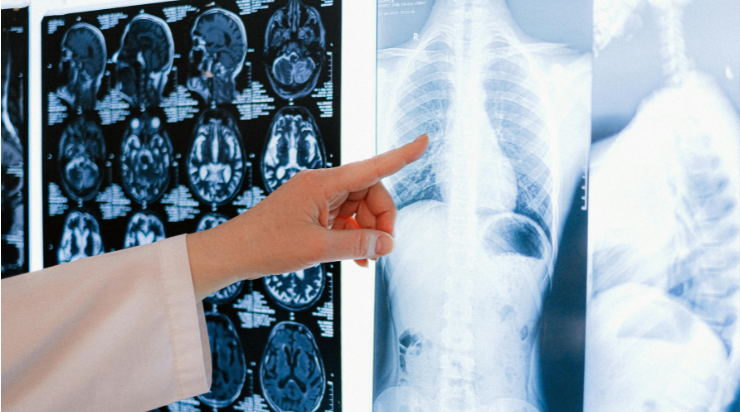
Chest X-rays (CXRs) represent the most common imaging exam worldwide, ordered billions of times annually for pneumonia, heart failure, tuberculosis, and more. In 2026, surging volumes from post-pandemic screening, aging populations, and primary care expansion have created a crisis: radiology departments drown in CXR backlogs, delaying care. Automation via AI promises relief, triaging and pre-reporting thousands of studies daily.
Yet fears persist that speed sacrifices accuracy, eroding diagnostic trust. This post argues automation elevates standards when implemented thoughtfully, preserving human oversight amid unprecedented demand. Radiologists remain essential; AI merely restores their capacity to uphold excellence.
The Scale of the CXR Volume Explosion
CXR volumes have ballooned 20–50% since 2020, driven by COVID sequelae, routine screenings, and ER overuse. U.S. hospitals process over 100 million CXRs yearly; UK NHS waits exceed 12 weeks in some trusts. Rural and low-resource settings fare worse, with ratios of 1 radiologist per 50,000 scans.
A single shift might yield 200–300 CXRs per radiologist, far beyond sustainable cognitive loads. Fatigue breeds errors; studies link high volumes to 15% miss rates for subtle findings like early nodules. Without intervention, patient harm escalates.
Automation addresses this not by cutting corners but by stratifying workflows intelligently.
AI Automation in CXR Workflows
Modern CXR AI, like CheXpert or Futuuri models, detects 14+ pathologies with sensitivities above 90%. Deployed as triage engines, they prioritize abnormals (e.g., pneumothorax urgency scores) and auto-classify normals for batch review. Structured report generation populates findings, confidence scores, and recommendations.
Unlike black-box tools, 2026 systems emphasize auditability: heatmaps highlight regions of interest, uncertainty flags trigger human review. Integration with PACS/RIS ensures seamless adoption, processing studies in seconds.
The goal: amplify throughput without diluting precision.

Safeguarding Standards Amid Automation
1. Rigorous Validation and Human-in-the-Loop
Automation succeeds via continuous validation. AI must match or exceed radiologist benchmarks on diverse datasets, including edge cases like pediatric or obese patients. Human-in-the-loop mandates override any AI call, with 100% audit of high-risk cases.
Post-deployment monitoring tracks false positives/negatives, retraining models quarterly. This upholds standards, often improving them through consistency.
2. Uncertainty Quantification and Escalation
No AI is infallible; top systems quantify epistemic uncertainty, escalating ambiguous scans (e.g., overlapping opacities) to experts. Thresholds calibrate to local epidemiology, ensuring low false negatives for critical findings like effusions.
This risk-stratified approach maintains gold-standard sensitivity.
3. Standardized Reporting and Interoperability
Variability plagues manual CXRs; AI enforces templates (e.g., Fleischner Society guidelines), reducing linguistic ambiguity. Blockchain-like audit trails log every step, supporting medico-legal defense.
Interoperability with EHRs contextualizes findings, preventing isolated interpretations.
4. Bias Mitigation and Equity Focus
Training on global datasets counters demographic biases; tools like FairAI audit performance across ethnicities. In low-resource areas, edge-deployed models democratize access without compromising quality.
Evidence: Automation Elevates, Doesn’t Erode, Quality
Trials affirm this. AZmed’s Rayvolve reduced TAT by 50% while boosting pneumothorax detection to 96%. NHS pilots cut misses by 22% via AI-human hybrid reading. Futuuri’s chest AI, validated in Finnish trials, achieves 92% concordance with experts, handling 10x volume.
Meta-analyses show hybrid workflows lower error rates overall, as AI catches oversights humans miss under fatigue. Standards rise, not fall.
Case Studies: Real-World Wins
Finland’s HUS Network: Futuuri Deployment
Helsinki University Hospital uses Futuuri for CXR triage, processing 5,000 studies weekly. AI flags urgents, drafts reports; radiologists verify in half the time. Miss rates dropped 18%, backlogs cleared.
U.S. Community Hospitals: Scaling Precision
Everlight Radiology automates 70% normals, focusing experts on complexes. Quality metrics match academic centers.
Global South: TB Screening Surge
In India and Africa, AI detects TB with 95% specificity, easing burdens where radiologists are scarce. WHO-endorsed, standards hold via tele-expert review.
These prove automation scales excellence equitably.
Pitfalls to Avoid: When Automation Risks Standards
Rushed deployments falter. Over-reliance without oversight spikes false positives; siloed AI ignores clinical context. Vendor lock-in hinders customization.
Solutions: multidisciplinary governance, phased rollouts, radiologist-led training. Measure success by outcomes, not speed alone.
Economic Imperative: Value Over Volume
Automation slashes costs: 30% throughput gains cut overtime, outsourcing by millions. Reimbursements favor AI-enhanced reporting; value-based care rewards prevention.
Burnout plummets, retention soars, sustaining human talent.
Radiologists: Guardians of the Gold Standard
Automation frees radiologists for synthesis: correlating CXRs with labs, history, follow-ups. They curate AI, innovate protocols, educate peers. Education evolves to AI stewardship.
The Path Forward: Balanced Automation
2026 demands standards-first AI: transparent, validated, human-centric. Protocols like ACR’s AI Appropriateness Criteria guide ethical scaling.
Conclusion: Higher Standards Through Smarter Automation
The CXR crisis demands action; automation delivers without compromise. Paired with vigilant oversight, it upholds, even elevates, diagnostic rigor. Radiologists thrive, patients win, volume managed, standards supreme.